
Our Services
How We Can Help
Aquatic Ecology is an experienced environmental consultancy with significant resources for undertaking field work anywhere in New Zealand. We can assist you with all matters pertaining to the aquatic environment and its ecology.
We have experience across all freshwater ecosystems, including (but not limited to) rivers, streams, drains/network utility waterways, wetlands and lakes.
What Are We Up To Now?
Currently Aquatic Ecology are undertaking inanga (whitebait) spawning surveys in the Greater Wellington Region, conducting fish salvages for flood protection works in Akaroa, and assisting with various waterway diversion and remediation consents for residential developments. Aquatic Ecology has also recently undertaken work in Blenheim, Timaru and Invercargill.
Environmental Assessment
Short-term and long-term environmental monitoring is a cornerstone of Aquatic Ecology's work. This is normally associated with resource consent requirements. Clients for this type of work have included District Councils, the Department of Conservation, Landcare Research, NIWA, and various vineyards. The work has included monitoring of water quality, invertebrate populations, freshwater fish stocks, fish habitats, and fish spawning surveys.
Aquatic Ecology has a wide variety of field equipment, including water quality meters, boats, a large variety of fishing and invertebrate sampling equipment, and flow gauging gear. We have an MPI permit to undertake surveys of aquatic biota using scientific and unconventional methods.

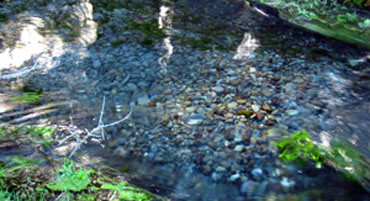
Trout redd surveys are a prominent feature of Aquatic Ecology's environmental monitoring and research work. They have been undertaken for District councils, Regional Councils and for Fish and Game Councils. Pictured (above) is an excavated trout redd.
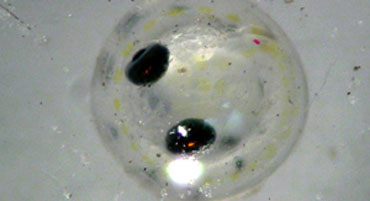
Inanga (whitebait) spawning surveys are also an important part of our work and Mark Taylor is recognised nationally as an expert in this field, having been involved in mapping and restoring spawning habitat throughout the country. An Inanga egg (above) is photographed through a microscope.
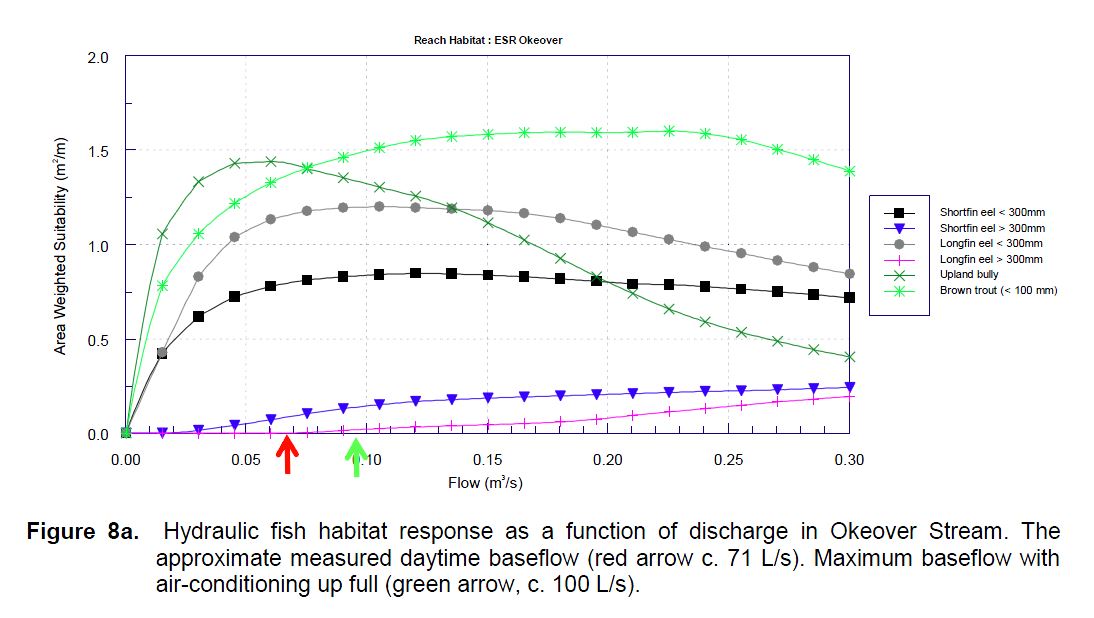
Aquatic Ecology can also produce predictive habitat models, relating to the abstraction and augmentation of water. This is achieved using SEFA (System for Environmental Flow Analysis) software. Using this technology, Aquatic Ecology can model the potential impacts of proposed projects, relating to flow alteration and species habitat availability. The photo above is an example of one such model, with the availability of fish habitat changing with flow, dependent on the species.
Resource Consent Applications
Aquatic Ecology has considerable experience assisting with consent applications for stormwater discharge and waterway diversions for new subdivisions. Aquatic Ecology staff contributed to the Christchurch City Council's Waterways, Wetlands and Drainage Guide 2003 (Parts A & B). These documents, Part B in particular, provide guidelines for the design of stormwater treatment systems that minimise the impacts on the downstream environment.
Other resource consent applications that Aquatic Ecology has been involved with include waterway diversions and naturalisations, bridge works, and alterations in the base flows of urban waterways.
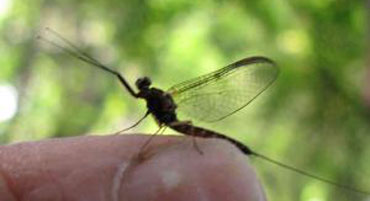
The effects of other discharges on Water Quality and aquatic life can also be assessed by Aquatic Ecology. For example, we recently assessed the impacts of the sewage discharges at Hanmer Springs and Cheviot on their respective receiving waterbodies. Above is an adult mayfly. Its aquatic larvae can be sensitive to low dissolved oxygen (DO), an indicator of poor water quality.

For applications to take water, Aquatic Ecology can assess the hydrology and ecology of the source waterway, and its sensitivity to flow depletion (see Case Studies: Water Takes). Depending on the results of that assessment, we can then make a recommendation for appropriate minimum flow specific to the Ecology. Aquatic Ecology has experience working in this area for small-scale farmers, large-scale corporate farmers, district councils, Transit NZ, and ski fields.
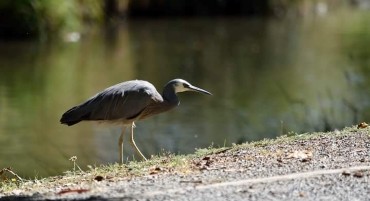
Avifauna can be an important factor in resource consenting for an aquatic environment. Aquatic Ecology can now offer bird surveys, specialising in water birds, which can include nesting and general habitats.
Aquatic Resource Surveys and Research

Aquatic Ecology staff have extensive experience in undertaking aquatic resource surveys on waterbodies throughout the South Island, both in streams and small lakes. This work is facilitated by the use of small boats. Fyke nets (above) and Gee Minnow™ traps are an important part of our work, particularly where electric fishing machines are ineffective.
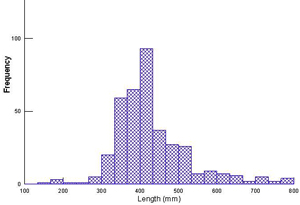
A recent Christchurch study surveyed the algal, aquatic invertebrate, and fish communities, in conjunction with water quality in Travis Wetland. It found that the Wetland is an important local rearing habitat for the shortfin eel. The graph (left) shows the length frequency histogram of the sampled population.
Aquatic Ecology has also undertaken research into factors which affect the success of trout spawning (see Trout Spawning Case Study ) for Fish and Game Council (NZ).
Habitat Restoration and Development
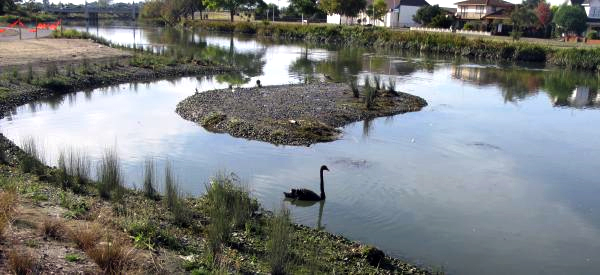
Aquatic Ecology has experience and expertise in the redevelopment of waterways for habitat restoration purposes. This includes consulting in the design of inanga spawning habitat (pictured above), and stream designs targeted toward specific resident fish species, such as eels/tuna.
Habitat restoration can also encompass fish passage and riparian flora. These factors have significant impacts on the biodiversity in a given waterway reach.

Aquatic habitat restoration and development involves designing habitats with both natural amenity values and ecological benefits. This requires knowledge cross-over between landscape architecture and local ecological requirements. Aquatic Ecology works with developers and landscape architects to ensure that restored or developed habitats not only look great, but provide a suitable environment for the invertebrates and fish which reside there.
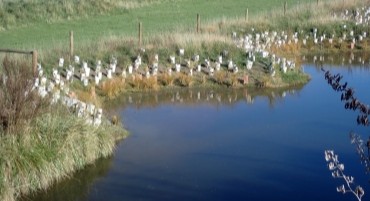
In order to target habitat restoration toward existing fauna, Aquatic Ecology offers ecological surveys before habitat restoration works commence. These surveys can be replicated following restoration works, to determine whether the habitat restoration had the desired effect, especially with regard to inanga spawning habitat.
Water Quality and Sediment Chemistry
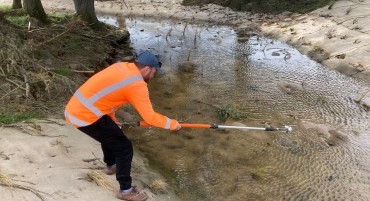
The quality of open water is important, but has to be put in context with the requirements of the aquatic life that inhabits, or could inhabit, the surrounding environment. Aquatic Ecology routinely assesses water quality (above) to establish whether nutrients, contaminants or suspended sediment compromise the aquatic environment.
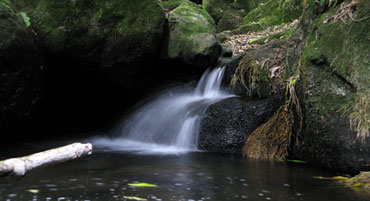
Aquatic Ecology staff have qualifications and extensive experience in measuring, assessing, and reporting on water quality, and sediment chemistry and contamination. This is both in the context of state of the environment monitoring, and discharge consent applications. Pictured above is Grehan Stream, a local water supply for Akaroa.
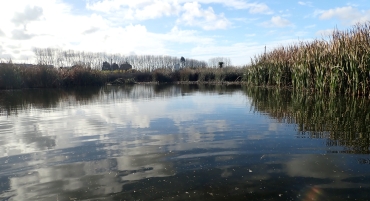
Some contaminants, particularly heavy metals, bind to fine sediment, and this contaminated sediment can settle on the bottom of waterways, ponds, and lakes. The environmental risk of contaminated sediment is particularly important in respect to stormwater discharges into waterbodies from urban catchments. These contaminants may still pose a threat to aquatic life, as they may be still biologically available to plants and animals. Aquatic Ecology has experience and expertise in analysing sediment chemistry from urban catchments.
Fish Translocation
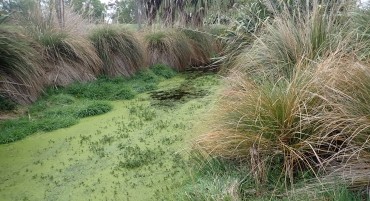
Fish are an important part of New Zealand's native biodiversity, and as such require protection from works in aquatic ecosystems. Native fish species can reside in all types of waterbody, including small drains with intermittent surface water. Aquatic Ecology offers fish translocation services prior to any works in waterways or wetlands. This activity is often a condition of consents for instream works, including waterway diversions and naturalisations.
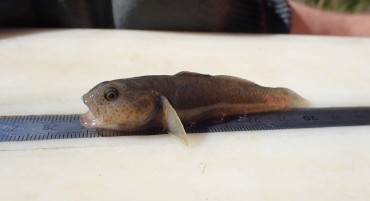
Aquatic Ecology has significant experience in fish translocation and fish salvage works, across all aquatic habitats, including wetlands, streams, and large braided rivers. During a translocation or salvage, fish are carefully captured from their resident habitat using an appropriate fishing method, and transferred to an adjacent habitat of equal or better quality.
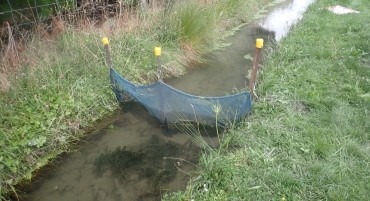
Waterway diversions often involve pumps or heavy machinery. To ensure fish are not affected by these, Aquatic Ecology can install council-compliant fish screens upstream and downstream of any instream works. Fish screens ensure fish do not re-enter the worksite following translocation efforts.
Wetland Delineation
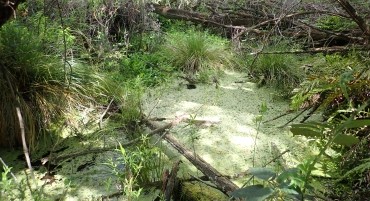
Wetlands are legally defined by the Resource Management Act 1991 and National Policy Statement for Freshwater Management 2020. The presence of wetland areas can dictate consents for irrigation, earthworks and other activities. Wetlands should be identified early in a project, to ensure landowners can make informed decisions during the consent process.
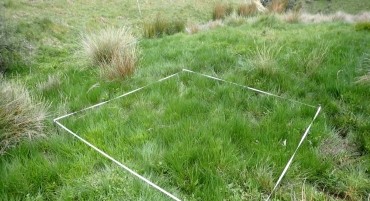
A wetland delineation typically involves a desktop assessment, using historic aerial imagery, and an onsite inspection by experienced ecologists. Aquatic Ecology has extensive experience in the delineation of wetlands, to ensure wetland areas are accurately defined.
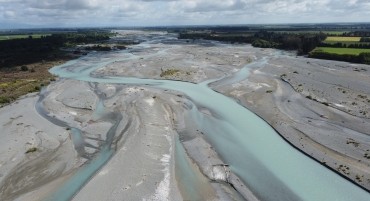
If appropriate, Aquatic Ecology can utilise a drone to further understand the extent and connectivity of wetland areas, through high resolution aerial photography. This tool is critical in some areas, especially locations with difficult access or complex wetland networks.